
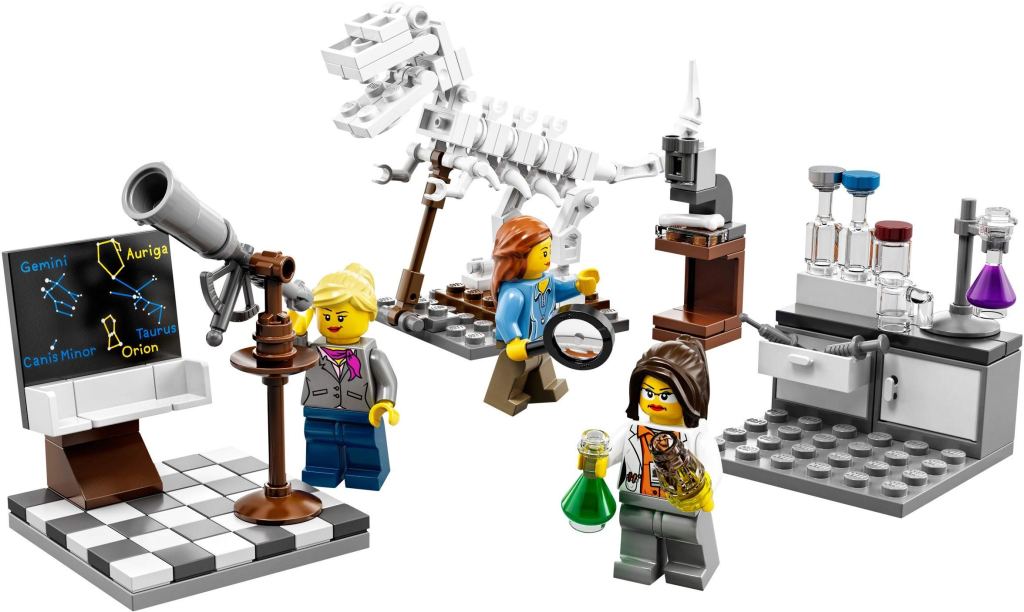
Since the inception of toy building bricks in the 1930s, Americans have perceived brands like LEGO, Mega Bloks, and Tyco Super Blocks as “boy’s toys.” Has this perception changed in the 21st century? In 2014, seven-year-old Charlotte wrote to LEGO, stating “All the girls did was sit at home, go to the beach, and shop, and they had no jobs, but the boys went on adventures, worked, saved people, and had jobs, even swam with sharks.” She wanted more “LEGO girls” and less “boy people.”
LEGO spokesman Michael McNally acknowledged this was a fair point. “Why wouldn’t there be more female representation?” Six years before Charlotte’s letter, LEGO conducted a global research with 4,500 girls and their moms. What they uncovered was startling. Girls and boys played differently with bricks, and they consistently had distinct ideas on how to interact with the same toys they encountered. LEGO realized a familiar dynamic, that boys and girls from a young age play differently.

As a result of these findings, LEGO launched the Friends line of sets in 2012. While popular among girls, popular media publications questioned the company’s decision, claiming Friends (which have slightly larger figures than typical Minifigures) were a simplified version of typical LEGO sets. But why all the fuss? If girls are building creatively, with bright colored bricks and female-gendered themes, should that be enough? At the end of the day, LEGO markets products that kids (and adults) want. In 2008, approximately 90 percent of sets being sold were intended for boys. The release of the Friends and Botanicals lines in 2021 (geared towards women) have reduced this percentage, and these sets continue to inspire creativity among girls and women.
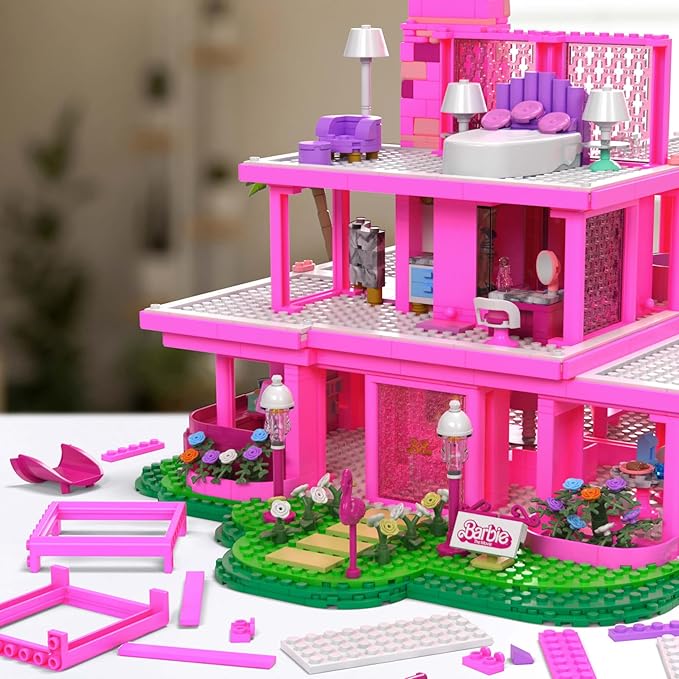
Mega Bloks, not to be outdone by LEGO, partnered with toy giant Mattel in 2012 to release the first-ever Barbie building collection designed specifically for girls. “Mega Bloks and Barbie know how girls play. Through our collective brand heritage and expertise in product research and development, we have created a completely new Barbie play experience,” said Vic Bertrand, Chief Innovation Officer, MEGA Brands. “With a focus on creative play and customization, the possibilities for girls are endless.”
Mattel acquired MEGA Brands in 2014, and released a Mega Bloks American Girl line of sets in 2016. Another line of Barbie building sets was released in 2022, in advance of the Barbie film’s release in 2023. Mattel’s toy portfolio and strategic partnerships allowed for girls to build, but within a line of doll collections that most were already familiar with.
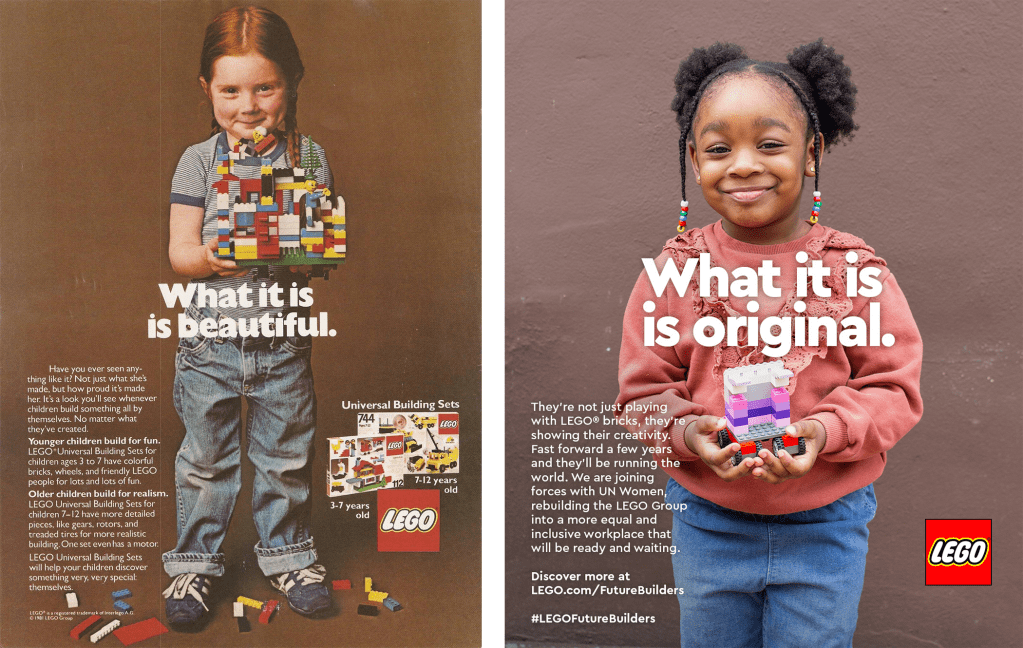
Long before LEGO conducted a global study of girls and moms, interlocking bricks were marketed for boys and girls. While no specific sets for girls existed, toy companies thoughtfully included boys and girls engaged in play on their packaging. Not surprisingly, these sets were overwhelmingly favored by boys. It wasn’t until 1971 that the first interlocking sets for girls were released– LEGO’s Homemaker series. The theme was designed to provide a dollhouse-like play experience, with molded and printed pieces depicting furniture. The majority of sets were released before the modern Minifigure (1978), but focused on luring fans of Barbie and other dolls into the world of building bricks.
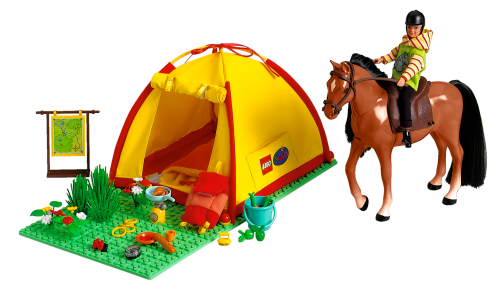
By 1979, LEGO heavily engaged in gendered play. The short-lived Scala theme allowed girls to create jewelry and beauty accessories with bricks. This line was a deviation from typical LEGO sets, as it left little room for building and creativity. In 1992, LEGO released Paradisa, filled with pinks, purples, and yellows that appealed to girls. While these sets included Minifigures of both genders, male figures contained active jobs while women held passive lifestyles.
Two years later, LEGO created doll-like figures as part of their Belville line. These sets included large panels and many accessories, focusing more on play than building. LEGO’s all out attempt to compete for girls’ attention came to fruition in 1997, with the re-release of Scala. These figures essentially were Barbies, and marked a seemingly desperate attempt from LEGO to shake its “boy’s toys” perception. Clikits, an updated version of the original Scala line, was another failed attempt to draw in girls.
In 1990, Tyco Toys, a major LEGO rival, launched the Super Blocks Dream Builders line just for girls. “Why should little boys have all the fun with building blocks?” Tyco branded this series as “the first and only building block set designed expressly for girls.” While LEGO’s Homemaker’s series was arguably the first interlocking brick toy to achieve this, Tyco’s sets included wall panels, bricks, figures, and accessories for hours of pastel play. While the Super Blocks line was completely shuttered the following year, one must wonder how Tyco would have marketed sets to girls in the late 1990s and beyond.

Continuing the trends of creating pastel building sets in the 1990s was Ritvik’s Mega Bloks, which were first launched in 1984. Nine Fantasy sets were released, with play ranging from weddings to shopping to nurseries. The last series set released consisted of loose bricks, giving girls a chance to add on to previous builds or create something entirely new.
Timeline of toy brick lines created specifically for girls:
- LEGO: Homemaker (1971-1982)
- LEGO: Scala (1979-1980)
- Tyco Toys: Super Blocks Dream Builders (1990)
- LEGO: Paradisa (1992-1997)
- LEGO: Belville (1994-2008)
- Ritvik: Mega Bloks Fantasy (1994-1997)
- LEGO: Scala (1997-2001)
- LEGO: Clikits (2003-2006)
- LEGO: Friends (2012-Present)
- MEGA: Barbie (2012-2017)
- Shopkins: Kinstructions (2015)
- Mattel: Barbie Builder w/Mega Construx (2016)
- MEGA: American Girl (2016-2018)
- MEGA: First Builders/Toddlers, Pink (2018-Present)
- LEGO: Dots (2020-2023)
- LEGO: Botanicals (2021-Present)
- MEGA: Barbie (2022)
Garrick Johnson, a toy analyst for BMO Capitol Markets, stated in 2013, “When boys build a construction set, they’ll build a castle, let’s say, and they’ll play with the finished product on the outside. When girls build construction sets, they tend to play on the inside.” Research has shown that boys and girls play differently, but parents have been pushing for equal play. It is, however, hard to argue against seven-year-old Charlotte’s request– female figures should experience action just as much as male figures. As a response to these concerns, LEGO released the Elves (2015-2018) and DC Super Hero Girls (2017) themes for girls. These sets included Friends-sized figures, but provided opportunity for girls to experience adventure, battle, and be heroes. While short lived, these themes gave way to more adventurous Friends sets, including jungle and underwater exploration.
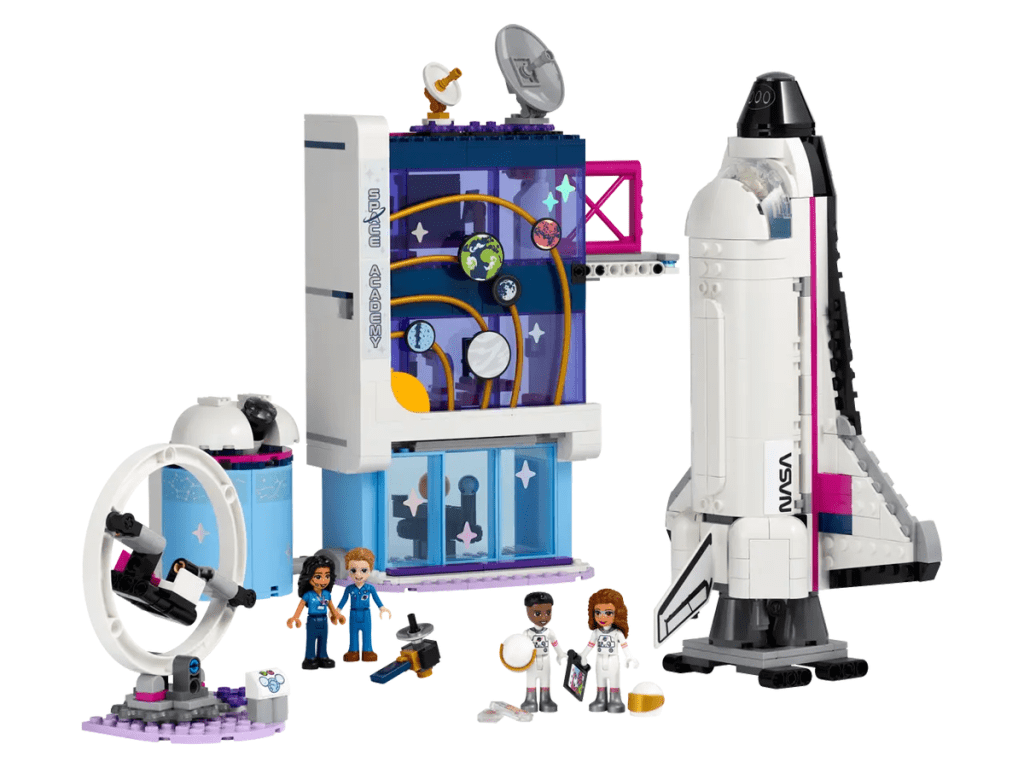
LEGO and MEGA may have different approaches when marketing to girls, but both have provided ample opportunities for toy building experiences. Whether guarding a castle or caring for a child, these toys allow girls to play in a way that best suits their imagination and creativity.
Visit the Constructing Imagination: How Toy Companies Inspired Girls to Build exhibit at the Walnut Hills Library in Cincinnati (April 2-30, 2025) for a closer look at toy brick sets that inspired girls.

 ACT Museum
Leave a comment