
Before WWI it was quite common for German manufacturers to produce toys for Americans. One company that found success through exports was F. Ad. Richter & Co., founded by Friedrich Adolf Richter in Germany in the early 1880s. The company produced Anchor (Anker) Blocks, as well as pharmaceuticals, music boxes, and gramophones. By 1887, an office in New York City began selling the popular Anchor Blocks. By 1912, the office began manufacturing the stone blocks (and pharmaceuticals) under the leadership of A. Paul Fricke. The company also produced Comet, Union, and other named block sets.
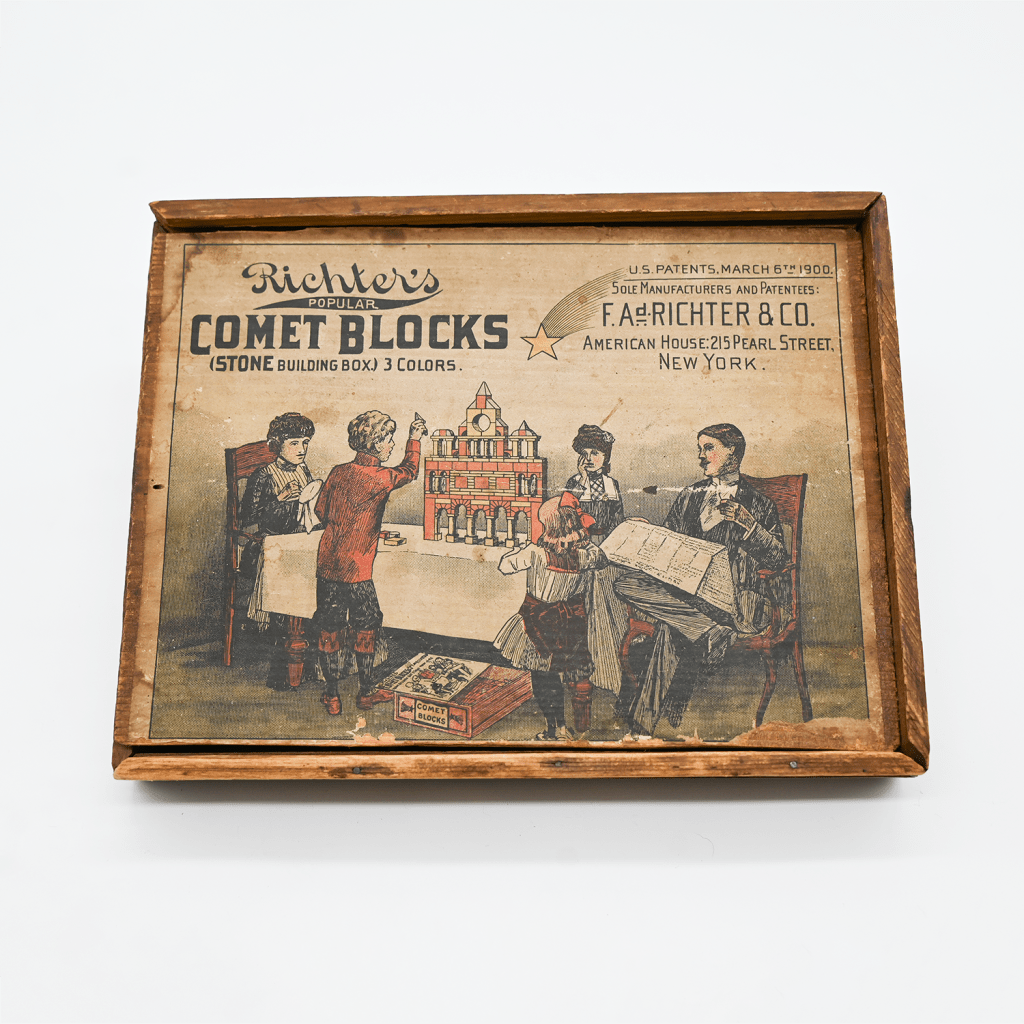
A.C. Gilbert, the founder of Erector sets, praised Anchor Blocks despite seeing the company as a major competitor in the toy industry. In his autobiography, Gilbert stated, “These stone blocks were very heavy, beautifully designed, and came in a variety of shapes that made possible the building of some wonderful structures.”
Despite its German roots, Richter remained prosperous nearly through the entirety of WWI. In April 1918, Richter was identified by the Alien Property Custodian as being German owned, meaning it was eligible to be taken over. The Alien Property Custodian was responsible for the USA assets of German citizens. While most assets were only to be held for the duration and returned to the original German owners after WWI, Richter was an exception. The company was not sold because of its pharmaceuticals, but because the stone blocks were considered to be a critically important factor in the development of the technical skills of German youth.
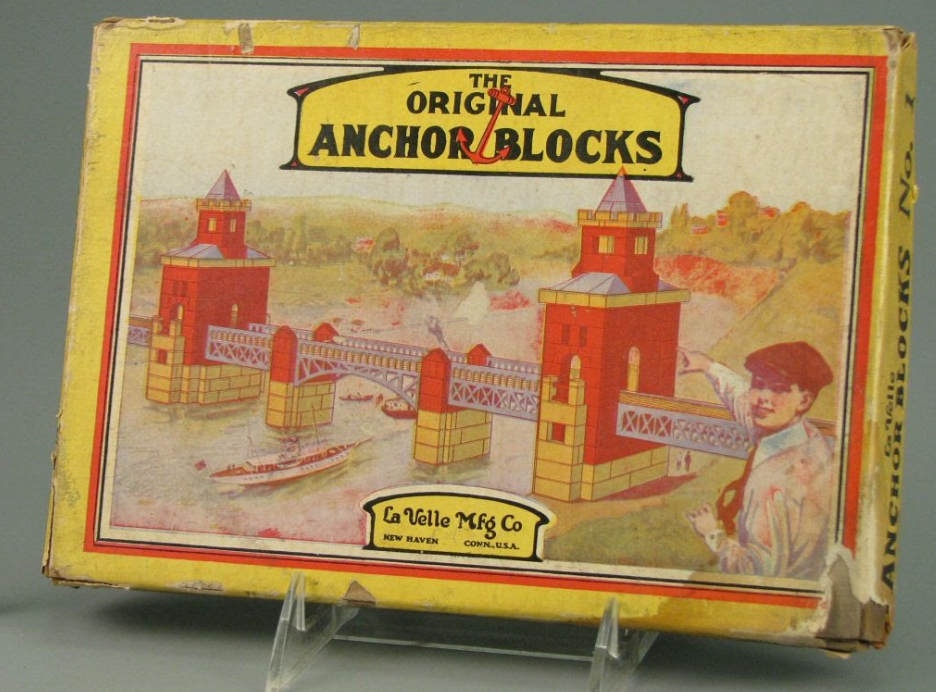
A.C. Gilbert, who lobbied for the US Government to seize the Richter & Co., purchased the company in 1919. By 1922, the Anchor Block sets were dropped from the Gilbert line and added to the line of the La Velle
Mfg. Company (Gilbert’s girls’ toy company), which were produced until 1929. Gilbert reintroduced Anchor Blocks after WWII, however due to poor quality and sales the product was abandoned by 1957.
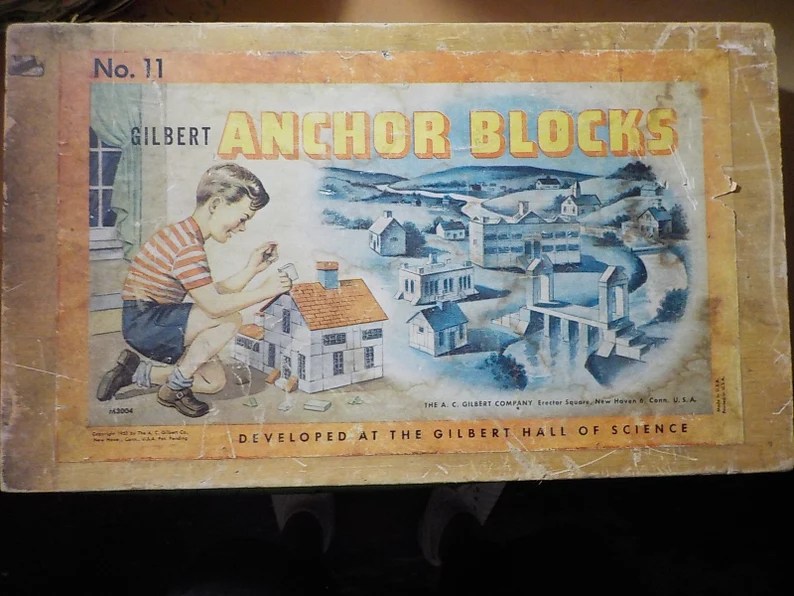
Meanwhile, Fricke, who was arrested for treason in 1918, began to rebuild his former stone block business. Richter had lost all its original trademarks, so the Block House, Inc. was chosen as its new name. In the early and mid-1920s, several prominent stores refused to carry the Anchor Blocks due to strong anti-German sentiment. Fricke turned to established Anchor Block builders, who helped distribute the sets to local shops and rebuild interest. This move proved successful, which may have caused Gilbert’s Anchor Blocks to cease production. By the 1930s large stores, such as F.A.O. Schwartz, carried the stone building sets once again. More anti-German sentiment permanently shuttered Block House during WWII.
 ACT Museum
Leave a comment