
While Danish company LEGO first began producing bricks in the United States under an agreement with Samsonite (a luggage company) in 1961, it was not the first corporation to produce toy building bricks in America. While a handful of companies produced interlocking bricks, including Bild-O-Brik made in Pennsylvania (1934), none are as important as Halsam Products. In 1917, Harold “Hal” Elliott and Samuel Goss, Jr. established Halsam, named after their likeness, in Chicago. In the early days, Halsam produced wooden toys such as dominoes, blocks, and logs. By 1939, the corporation applied for an interlocking brick patent. These “American Bricks” were made of hardwood and used peg, socket, and slot construction techniques.
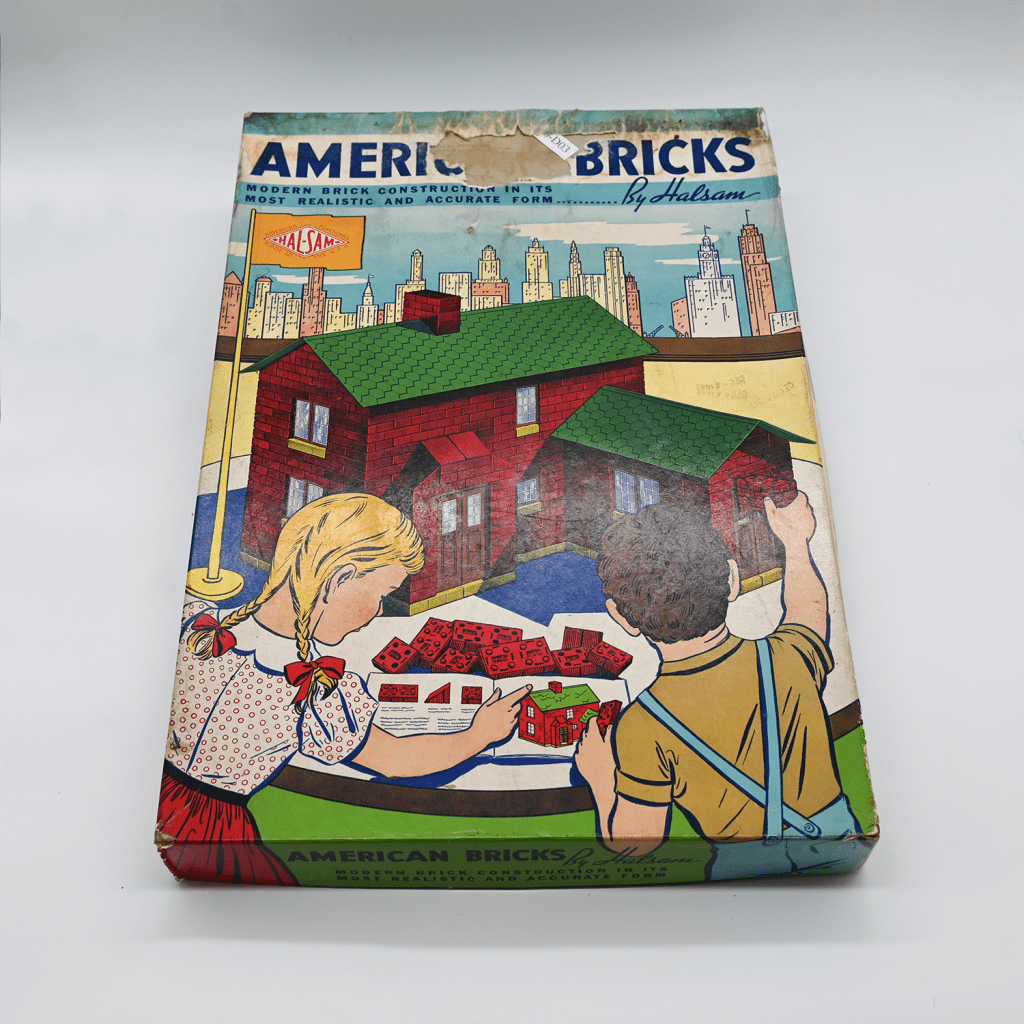

The transition from wood to plastic bricks occurred in 1941 was due to injection molding machines. Elgo (another namesake of Elliot and Goss) launched as a new division of the company in 1941, and the new American Bricks were market ready by 1942. WWII halted the release of the plastic bricks, as they weren’t on the market until 1947.
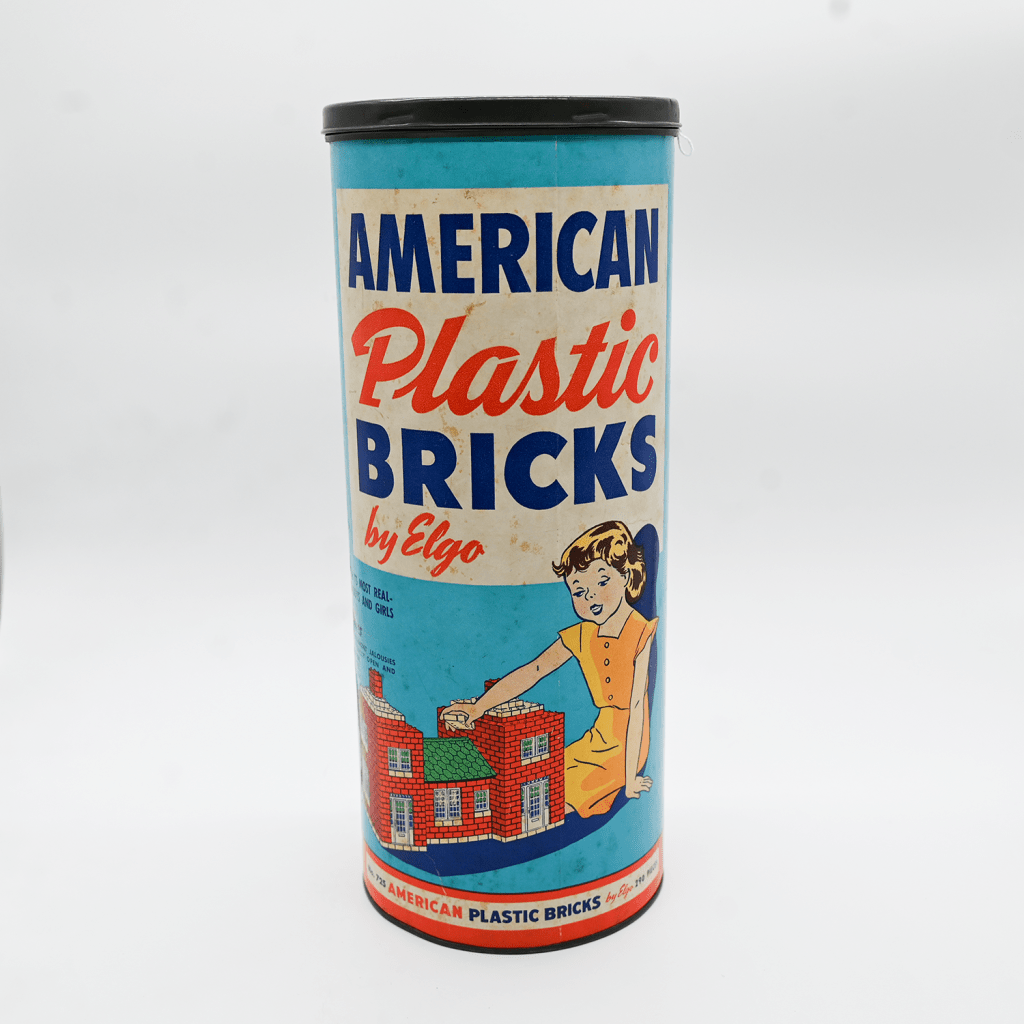
By the 1950s, Elgo’s American Plastic Bricks was one of the most popular interlocking building systems in the United States. LEGO was on the verge of entering the American market, and they found Elgo’s popularity and namesake too confusing for their potential customers. A meeting was called between Halsam and LEGO, and the American company initially demanded $250,000 (about $3 million in 2024) to sell their trademark. Through negotiations, LEGO knocked down the sale to $25,000. Playskool took ownership of Elgo and Halsam in 1962, followed by a takeover from Milton Bradley in 1968. By 1973, “Plastic Building Bricks” were sold under the Playskool brand only, until production ceased in the late 1970s.
 ACT Museum
Leave a comment